


Share this blog:
.png)
This is Section 5, excerpted from our Amberdata Crypto Market Review 2025 and 2026 Outlook: Six Regimes, One Story. Our full report spans 14 sections - ETF flows, derivatives, on-chain, liquidity, and our complete 2026 outlook.
Institutional yield-seeking drove 2025's leverage build - until it didn't
|
KEY TAKEAWAYS |
|---|
|
In January, the crypto carry trade was yielding 15%+ APR - over 10% above T-bills. Institutional capital flowed in, seeking yield in a rate-starved environment. Long spot, short futures: capture the basis while hedging directional risk. The strategy worked until October, when basis compressed toward zero, "hedged" positions became losing positions, and forced unwinds amplified the cascade.
Understanding the carry trade mechanics is essential for institutional readers. This wasn't speculation gone wrong - it was a legitimate yield strategy that became crowded, then unwound violently when market conditions shifted. The pattern will repeat in different forms; the mechanics are transferable.
Carry Trade Mechanics: The Setup
Exploiting the Basis. The crypto carry trade exploits the basis - the difference between futures and spot prices. When futures trade at a premium (contango), traders can capture yield by buying spot and shorting futures. As contracts approach expiration, futures converge to spot, and the trader keeps the premium.
The Math. A 15% annualized basis means futures trade 15% above spot on an annualized basis. Buy $100M spot, short $100M futures. As basis collapses at expiration, capture ~$15M annually (less funding and execution costs). With T-bills at 4.5%, the excess return of 10.5% attracted serious institutional capital.
The Risk. The strategy is not risk-free. If spot drops faster than futures (basis compression), the long spot leg loses more than the short futures leg gains. The "hedge" becomes a loss amplifier. This is exactly what happened in October.
Additional Risks. Additional risks include: funding rate variability (perpetual futures funding can swing against the position), exchange counterparty risk (funds held on exchange during the trade), and execution slippage (entering and exiting positions at scale moves markets). These frictions reduce realized returns below theoretical basis.
Basis APR by Tenor: The Term Structure Story
Market Expectations. Different contract tenors reveal market expectations about future basis levels and volatility.
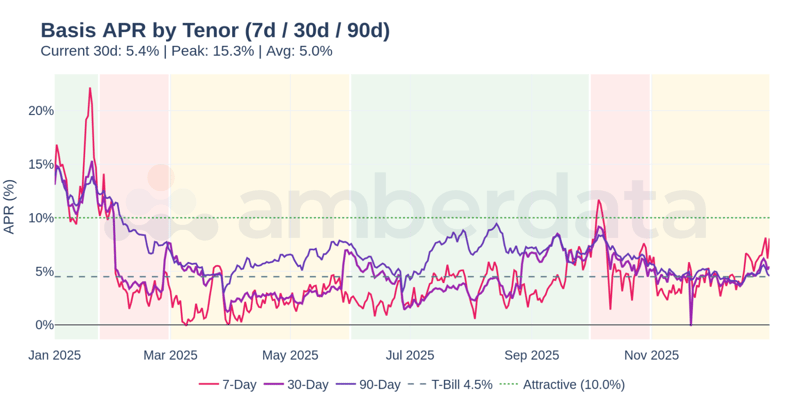
Figure 5.1: Basis APR by Tenor - 7-day, 30-day, and 90-day basis APR across 2025. Note how all tenors collapsed together during October stress.
Current Readings. Basis APR by tenor:
7-day: 8.1%
30-day: 5.4%
90-day: 4.6%
180-day: 4.4%
The inverted structure (shorter tenors yielding more than longer tenors) indicates near-term uncertainty.
YTD Averages. Average basis APR across 2025:
7-day: 4.4%
30-day: 5.0%
90-day: 6.8%
Normal contango would show 90-day above 7-day. The averages reflect periods of both normal and inverted structures.
15.3%
Peak 30-day basis APR reached in January 2025. Assuming T-bills at 4.5%, this represented 10.8% excess return - highly attractive for institutional carry traders.
Peak Readings. Maximum basis APR reached in 2025:
7-day: 22.2%
30-day: 15.3%
90-day: 14.6%
These peaks occurred during R1 (Policy Euphoria) when optimism about the Trump administration crypto policy drove aggressive long positioning and elevated futures premiums.
Overcrowding Warning. The tenor structure during peak basis is informative. 7-day basis exceeded 30-day, which exceeded 90-day - an inverted term structure despite bullish conditions. This inversion signaled overcrowding in the front-end. Too much capital chasing near-term yield compressed longer-dated opportunities. The inversion was a warning that positioning had become extreme.
Excess Return Over T-Bills: The Opportunity Cost View
Capital Allocation Comparison. Institutional capital allocation requires comparison to risk-free alternatives. The excess return over T-bills determines whether the crypto carry is worth the operational complexity and counterparty risk.
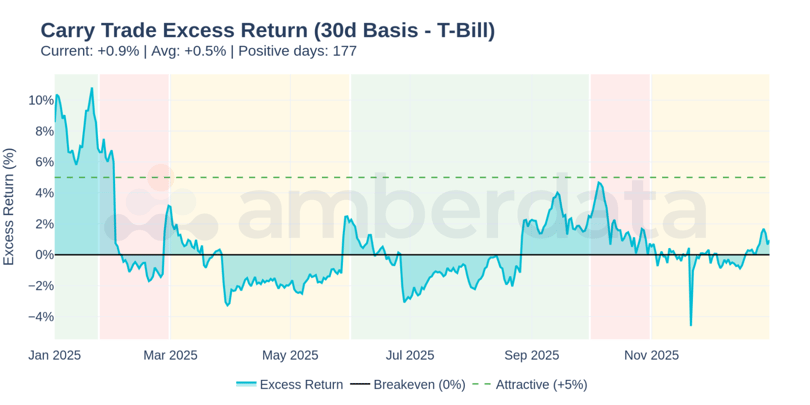
Figure 5.2: Carry Trade Excess Return - 30-day basis minus 4.5% T-bill rate. Positive = attractive; negative = capital should be elsewhere.
Current Excess. +0.9% over T-bills. This doesn't compensate for crypto-specific risks: exchange counterparty risk, execution slippage, funding rate variability, and basis volatility.
Peak Excess. +10.8% over T-bills (January peak). This level attracted institutional capital despite the risks. At 10%+ excess, the trade makes sense. Below 3% excess, it doesn't.
Quarterly Breakdown. Excess return by quarter:
Q1: +2.6% (marginal)
Q2: -1.0% (unattractive)
Q3: +0.0% (neutral)
Q4: +0.6% (unattractive)
Only early January offered compelling excess returns. Days with positive excess return: 177 of 365 (48%). Days with attractive excess (>5%): only 31 (8%). The carry trade opportunity window was narrow.
|
SO WHAT? Current basis levels don't justify institutional carry trade deployment. Capital should remain in T-bills until excess return exceeds 5% sustainably. Monitor for basis expansion as the signal to re-engage. |
Term Structure: Contango vs Backwardation
Market Structure Expectations. Term premium (90-day minus 7-day basis) reveals market structure expectations. Positive term premium (contango) indicates bullish expectations; negative (backwardation) indicates fear.
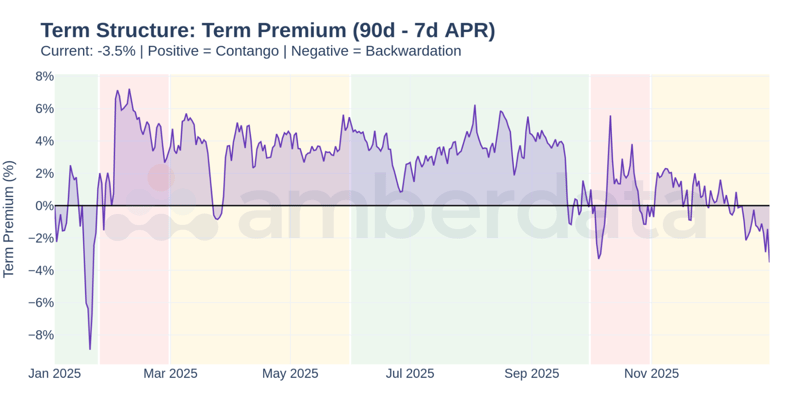
Figure 5.3: Term Structure: Term Premium - Positive = contango (normal, bullish). Negative = backwardation (fear). October stress drove inversion.
Current Reading. -3.5% term premium - mild backwardation. Near-term uncertainty exceeds longer-term expectations.
Average Reading. +2.4% term premium - normal contango on average. The year included extended periods of both structures.
Term Premium by Regime. How term structure varied across regimes:
R1 Policy Euphoria: -1.5% (inverted despite euphoria - overcrowded front-end)
R2 Security Shock: +4.2% (normalizing post-shock)
R3 Infrastructure Build: +3.6% (healthy contango)
R4 Institutional Expansion: +3.3% (bullish structure)
R5 Macro Shock: +0.7% (flattening during stress)
R6 Fragile Recovery: +0.2% (flat, no conviction)
R1 Inversion Explained. The R1 inversion is counterintuitive - during maximum euphoria, front-end basis exceeded back-end. This reflected overcrowded positioning in near-term contracts. Too much capital chasing the same trade compressed longer-dated opportunities while bidding up short-term premiums. The inversion itself was a warning sign of crowding.
Term structure tells you what the market believes. Contango means 'higher prices ahead.' Backwardation means 'fear now, uncertainty later.' R6's flat structure reveals a market without conviction.
Carry Attractiveness by Regime
Strategy Viability Mapping. Mapping carry trade viability to regimes reveals when the strategy worked and when it didn't.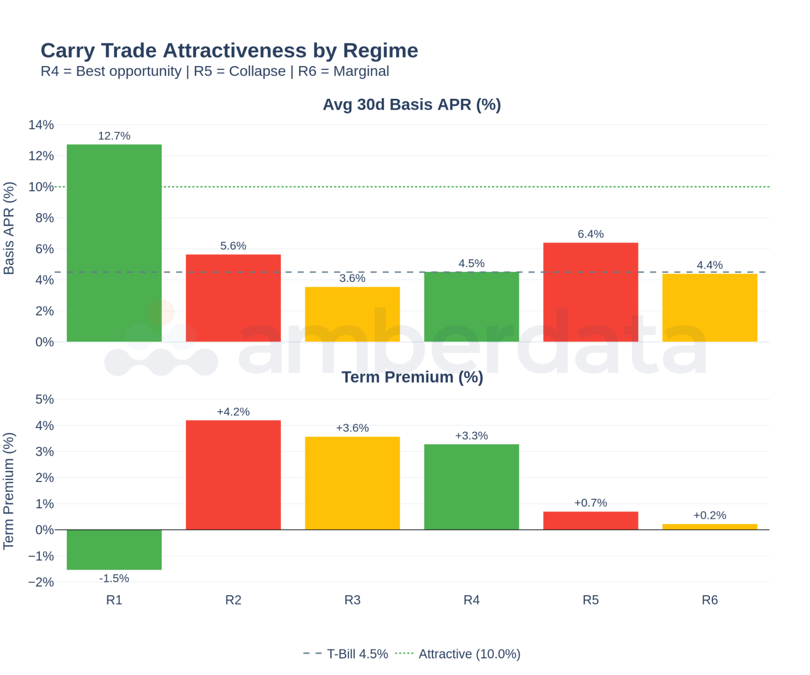
Figure 5.4: Carry Attractiveness by Regime - Only R1 offered 'Excellent' carry conditions. R3, R4, and R6 were unattractive. Most of 2025 did not justify carry trade deployment.
Viability Thresholds. How to interpret basis APR levels:
Above 12% APR: Excellent
8-12%: Good
5-8%: Marginal
Below 5%: Unattractive
Regime Assessment. Carry viability by regime:
R1 Policy Euphoria: 12.7% - Excellent (this was the window)
R2 Security Shock: 5.6% - Marginal
R3 Infrastructure Build: 3.6% - Unattractive
R4 Institutional Expansion: 4.5% - Unattractive
R5 Macro Shock: 6.4% - Marginal
R6 Fragile Recovery: 4.4% - Unattractive
Uncomfortable Truth. The regime assessment reveals an uncomfortable truth: most of 2025 did not justify carry trade deployment. R3, R4, and R6 - representing 246 days or 67% of the year - offered unattractive conditions. R2 and R5 were marginal at best. Only R1's 23 days offered genuinely compelling risk-adjusted returns.
The pattern is clear: the carry trade was only attractive for approximately 23 days in January (R1). Traders who deployed after February were accepting marginal or negative risk-adjusted returns. The crowding into an unattractive trade set the stage for October's unwind.
October: The Carry Unwind
Amplified Selling. October's cascade included a carry trade component that amplified selling pressure beyond pure directional liquidations.
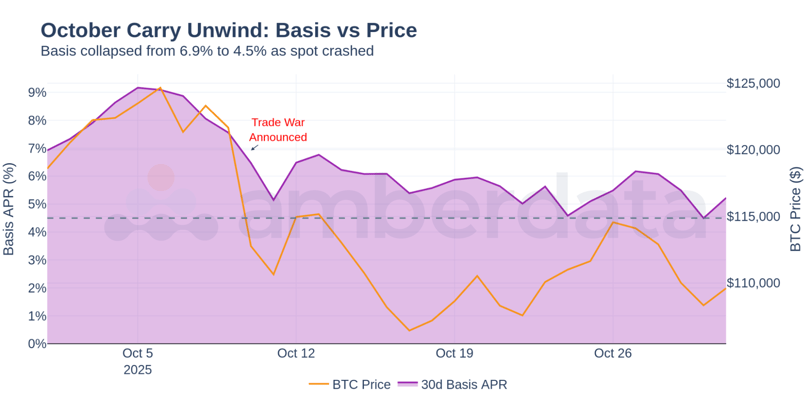
Figure 5.5: October Carry Unwind - Basis collapse from 6.9% to 4.5% coincided with price decline. The 'hedge' became a loss amplifier.
The Mechanism. Pre-crash: carry traders held long spot, short futures. Crash: spot sold off. Futures followed but more slowly (basis compressed). The long leg lost more than the short leg gained. "Hedged" positions showed losses. Risk managers forced position closure.
The Amplification. Closing the carry trade means selling spot (adding to downward pressure) and buying futures (supporting basis). The unwind itself accelerated the crash. This is mechanical, not discretionary - risk limits don't negotiate.
October Numbers. Basis behavior during the crash:
Basis start: 6.9%
Basis trough: 4.5%
Basis end: 5.2%
The 2.4% compression on a 30-day basis translates to roughly 0.2% loss on notional - modest in isolation but significant at scale.
Scale Impact. For a $100M carry trade position, 0.2% loss is $200,000 - manageable. But the basis compression occurred simultaneously with spot losses. If spot dropped 15% while basis compressed 2.4%, the combined loss approached 15.6% on a 'hedged' position. At institutional scale, these losses triggered risk limit breaches and forced unwinds.
The unwind sequence is predictable once it begins: risk managers identify losses on 'hedged' positions, demand position reduction, traders sell spot (adding selling pressure) and buy futures (supporting basis), the selling begets more selling until positions are cleared. This is mechanical, not discretionary - compliance doesn't negotiate with P&L limits.
|
SO WHAT? Carry trade unwinds amplify crashes. When basis compresses, 'hedged' positions become losing positions, and forced exits add selling pressure. This mechanism connects futures markets to spot markets during stress. Monitor basis compression as an early warning of cascade risk. |
ETF Flows and Basis: The Arbitrage Connection
Connecting Markets. ETF arbitrageurs connect spot ETF markets to futures markets. When basis is attractive, they buy ETF shares and short futures. When basis compresses, they unwind.
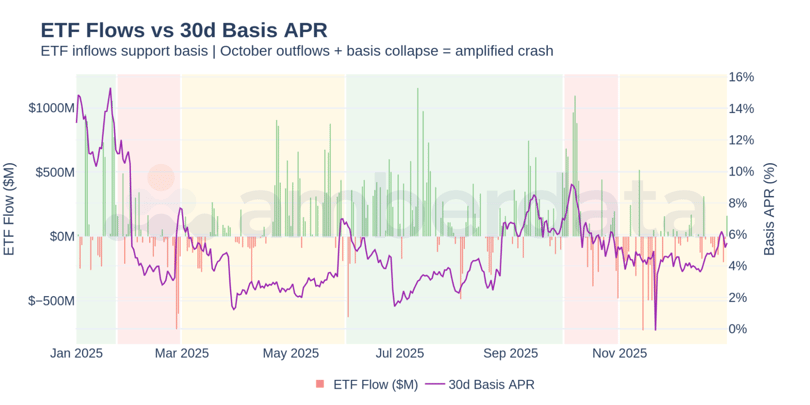
Figure 5.6: ETF Flows vs 30d Basis APR - ETF flows correlated with basis changes. October outflows partly reflected arbitrage unwinds, not fundamental selling.
The Arbitrage Mechanism. When basis exceeds ETF costs (~0.25% management fee + execution), arbitrageurs buy ETF shares (creating inflows) and short futures. When basis compresses below profitability, they redeem ETF shares (creating outflows) and close futures shorts.
October Implications. Some of October's ETF outflows reflected mechanical arbitrage unwinds rather than fundamental selling. Investors watching ETF flows as a sentiment indicator may have misread the signal. The outflows were not structural panic.
This connection explains why basis analysis matters for understanding flows. High basis attracts ETF inflows via arbitrage. Basis compression triggers outflows. The relationship is mechanical and predictable once understood. Watching only ETF flows without basis context leads to misinterpretation - October's outflows looked like capitulation but were partly just math.
Arbitrage Threshold. Looking at it simply, the arbitrage threshold is approximately basis minus ETF costs (management fee ~0.25%, creation/redemption ~0.10%, execution ~0.15%). When 30-day basis exceeds ~0.5%, arbitrage is profitable. When basis compresses below this threshold, existing positions unwind. This mechanical relationship explains significant portions of ETF flow variance.
Carry Score: A Composite Signal
Single Viability Metric. The Carry Score combines excess return, volatility, and term structure into a single viability metric.
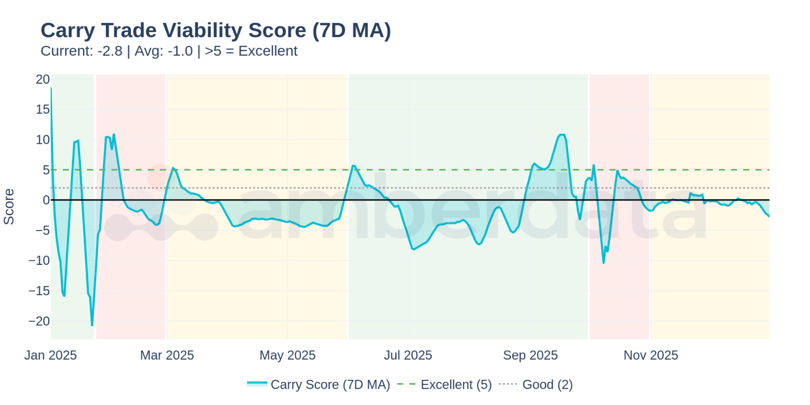
Figure 5.7: Carry Trade Viability Score - Score above 20 = deploy capital. Below 10 = stay in T-bills. Current conditions do not justify carry trade deployment.
Score Components. Excess return over T-bills (primary driver) / Volatility (risk adjustment) x Term structure sign (directional confirmation). Higher scores indicate more attractive carry conditions.
Current Assessment. As of writing, the score indicates unattractive conditions. Excess return is minimal, volatility remains elevated, and term structure is flat to inverted. Capital should remain in alternatives until the score improves.
Deployment Thresholds. How to use the score for capital allocation:
Above 20: Justifies institutional capital allocation
10-20: Marginal - acceptable for crypto mandates, not compelling for generalists
Below 10: Capital should remain in T-bills or alternatives
Current conditions fall in the unattractive range. Monitoring the score provides actionable signals. Rising score above 15 suggests preparing capital for deployment. Score crossing 20 triggers entry. Score falling below 10 triggers exit or position reduction.
Regime Carry Summary
Reference Table. A reference table for each regime's carry trade characteristics.
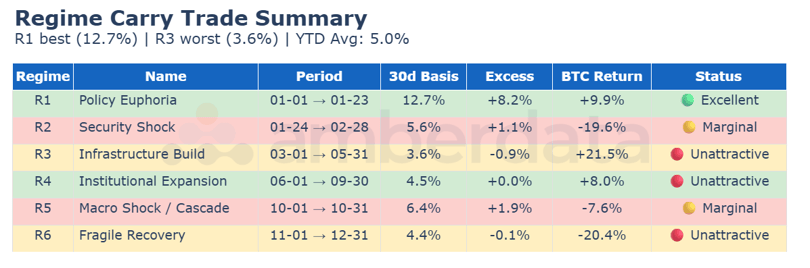
Figure 5.8: Regime Carry Trade Summary - Complete breakdown of basis, excess return, term premium, and viability assessment by regime.
Key Insight. R1 was the only regime where carry trade deployment was justified on a risk-adjusted basis. Traders who recognized this and exited by late January captured the opportunity. Those who stayed through R2-R6 experienced poor risk-adjusted returns or outright losses during the October unwind.
Lesson for 2026. Wait for attractive conditions rather than forcing trades in marginal environments. Basis exceeding 10% with positive term structure signals opportunity. Basis below 5% with flat or inverted structure signals patience. The carry trade is a tool - use it when conditions justify, ignore it otherwise.
For institutional allocators, the regime framework provides deployment timing guidance. Capital can remain in T-bills during unattractive regimes (most of 2025), then deploy rapidly when conditions improve. This approach avoids the opportunity cost of idle capital in marginal trades while capturing genuine opportunities when they appear.
2026 Outlook: When Does Carry Become Attractive Again?
Re-Engagement Signals. Several conditions would signal carry trade re-engagement in 2026.
Basis Threshold. 30-day basis sustainably above 10% APR (5.5%+ excess over T-bills). Current 5.4% is insufficient. Watch for basis expansion during the next bullish regime.
Term Structure. Positive term premium indicating normal contango. Current -3.5% inversion signals uncertainty. Normalization to +2-3% would confirm bullish structure.
Volatility Compression. 30-day volatility below 35% improves Sharpe ratios. Current 35% is marginally acceptable. Further compression would improve risk-adjusted returns.
ETF Flow Confirmation. Sustained ETF inflows indicate new capital entering - basis-supportive. Watch for $500M+ weekly inflows as confirmation.
Likely Catalyst. The catalyst most likely to restore attractive carry conditions: sustained price appreciation that drives futures premiums higher while T-bill rates decline. A new bull market leg, combined with Fed rate cuts, would recreate conditions similar to early 2024. Until then, patience is warranted.
|
THE BOTTOM LINE |
|---|
|
The carry trade story is a microcosm of 2025: institutional yield-seeking scaled faster than market infrastructure could absorb. Peak basis of 15%+ APR in January attracted capital. But the window was narrow - only 31 days offered attractive conditions. By October, crowded positioning in an unattractive trade created fragility. When spot prices dropped, basis compressed, 'hedged' positions lost money, and forced unwinds amplified the cascade. Current basis at 5.4% (0.9% above T-bills) doesn't justify carry trade deployment. The signal to re-engage: sustained excess return above 5% with positive term structure. |
This analysis builds on (S4)'s volatility and drawdown analysis - the risk conditions that determine carry trade Sharpe ratios and position sizing.
From here, (S7) examines the open interest and funding rate mechanics that accompanied the carry trade buildup. (S8) connects the basis-ETF arbitrage relationship to actual flow data during October's stress.
This article provides the carry trade analysis. The full Amberdata Crypto Market Review 2025 goes deeper:
- The $80,000 floor: What happens when ETF cost basis breaks?
- Which ETF issuer is already underwater? The entity-level breakdown reveals all
- October's "capitulation"? The data says arbitrage - here's the carry trade proof
- 123,173 BTC: The mega whale accumulation hiding in plain sight
- Six regimes, 14 sections: One framework that explains everything
- Early or late cycle? On-chain valuation signals decoded
- $60K or $180K? 2026 scenarios with specific price targets
- DeFi's $2B security crisis: What broke and why it matters
- SAB 121 to 401(k): The regulatory timeline reshaping crypto
- And more...

Full-Market Research. Institutional Depth. Derivatives, ETFs, on-chain, DEXs, microstructure, risk signals - and more. Subscribe at the bottom of our page for research that covers every corner of crypto and visit the Amberdata Research Blog.
Access Amberdata Intelligence for institutional-grade digital asset intelligence, or contact our team to discuss custom solutions.
Links & Resources
Platform
Recommended next reads
ETF Cost Basis Series
- Part 1/3: The $80,000 Floor (ETF Cost Basis)
- Part 2/3: Who Breaks First (ETF Cost Basis)
- Part 3/3: The Stress Test (ETF Cost Basis)
More key reads
- The ETF Exodus Decoded: Basis Arbitrage, Not Capitulation
- Bitcoin's Great Rotation: Who Bought the Dip and Why It Matters
- October 2025 Crash (7 charts): How $3.21B Vanished in 60 Seconds
- Beyond the Spread: Market Impact and Execution
Disclaimers
The information contained in this report is provided by Amberdata solely for educational and informational purposes. The contents of this report should not be construed as financial, investment, legal, tax, or any other form of professional advice. Amberdata does not provide personalized recommendations; any opinions or suggestions expressed in this report are for general informational purposes only.
Although Amberdata has made every effort to ensure the accuracy and completeness of the information provided, it cannot be held responsible for any errors, omissions, inaccuracies, or outdated information. Market conditions, regulations, and laws are subject to change, and readers should perform their own research and consult with a qualified professional before making any financial decisions or taking any actions based on the information provided in this report.
Past performance is not indicative of future results, and any investments discussed or mentioned in this report may not be suitable for all individuals or circumstances. Investing involves risks, and the value of investments can go up or down. Amberdata disclaims any liability for any loss or damage that may arise from the use of, or reliance on, the information contained in this report.
By accessing and using the information provided in this report, you agree to indemnify and hold harmless Amberdata, its affiliates, and their respective officers, directors, employees, and agents from and against any and all claims, losses, liabilities, damages, or expenses (including reasonable attorney's fees) arising from your use of or reliance on the information contained herein.
Copyright © 2026 Amberdata. All rights reserved.